Free written scope consultation - allowances, timeline, and change-order rules on paper before a single trade is scheduled
Paver Driveways in The Crossings, FL: What to Expect and What They Cost
A paver driveway in The Crossings runs $7,000 – $18,000 for most homes, takes 3 to 5 working days from demo to final sweep, and is built on a compacted base that has to be dug and graded before a single paver goes down. The range is wide because driveway size, base depth, and paver grade swing the number hard. Call (844) 834-8961 for a free on-site estimate and a written line-item quote.
How a Paver Driveway Gets Built Here, Stage by Stage
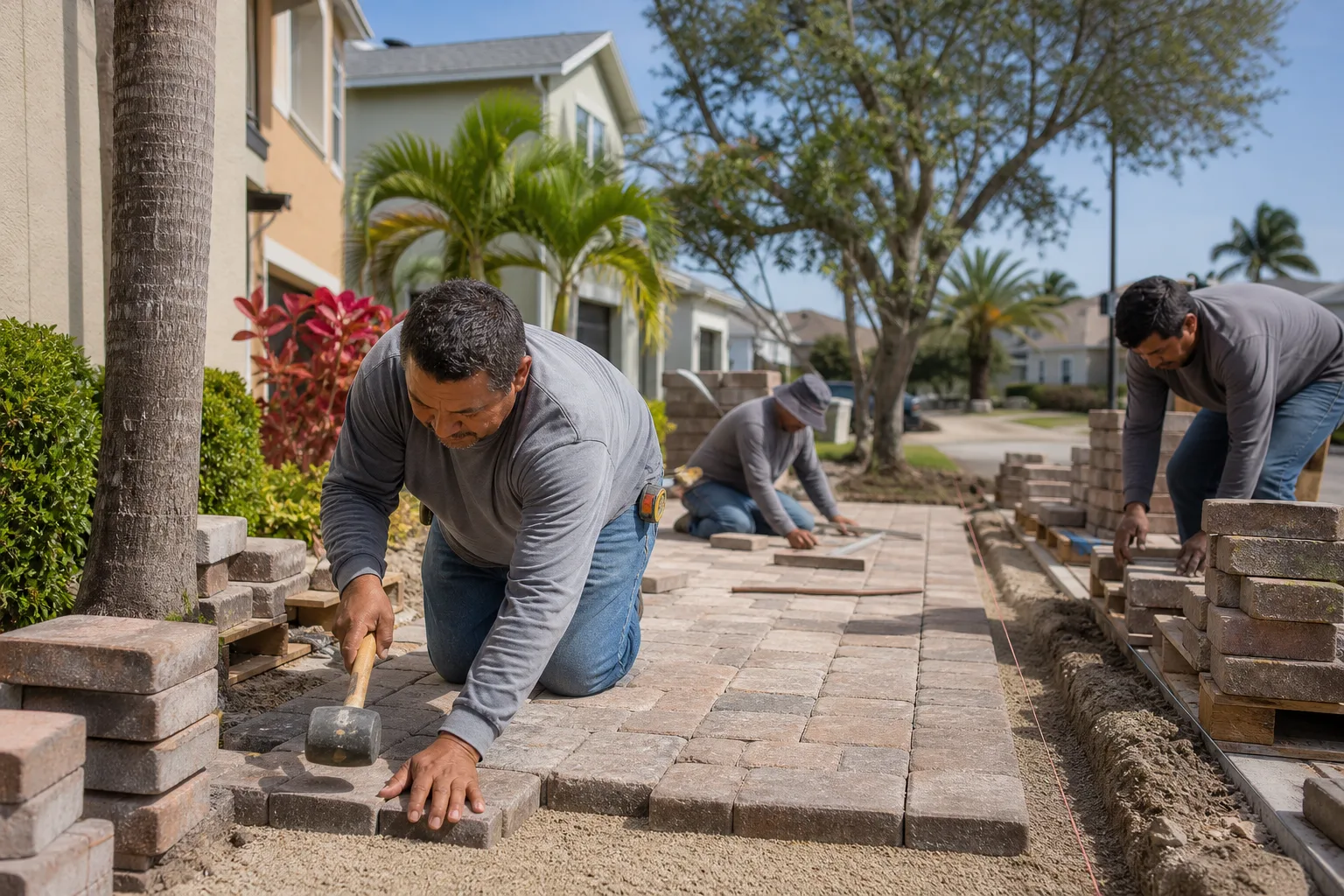
Most contractors talk about the finished look. The part that decides whether your pavers still sit flat in ten years is the four days of work nobody photographs. Here’s the sequence we follow on a paver driveway in The Crossings, and the decisions you’ll be making at each stage.
Stage 1: Layout, utility locate, and demolition (day 1)
We mark the new driveway footprint with you on site, confirm the slope drains away from the garage and not into it, and call in the utility locates before anything gets cut. Then the old surface comes out: existing concrete, asphalt, or the builder’s original paver apron, hauled off rather than buried. You decide the final layout and edge conditions here, including whether the driveway widens at the street for a second car. Skipping the locate step is how crews hit irrigation lines and cable, and it’s not optional on our jobs.
Stage 2: Excavation and base prep (days 1 – 2)
This is where the money hides. We excavate 8 to 12 inches depending on soil and traffic load, then lay a woven geotextile fabric to stop the subgrade from pumping up into the base. On top goes 6 to 8 inches of compacted limerock base, laid in lifts and run over with a plate compactor until it’s dense. A paver driveway is only as good as this layer, and a driveway over a shallow base will rut within two summers.
Stage 3: Edge restraint and the setting bed (day 2)
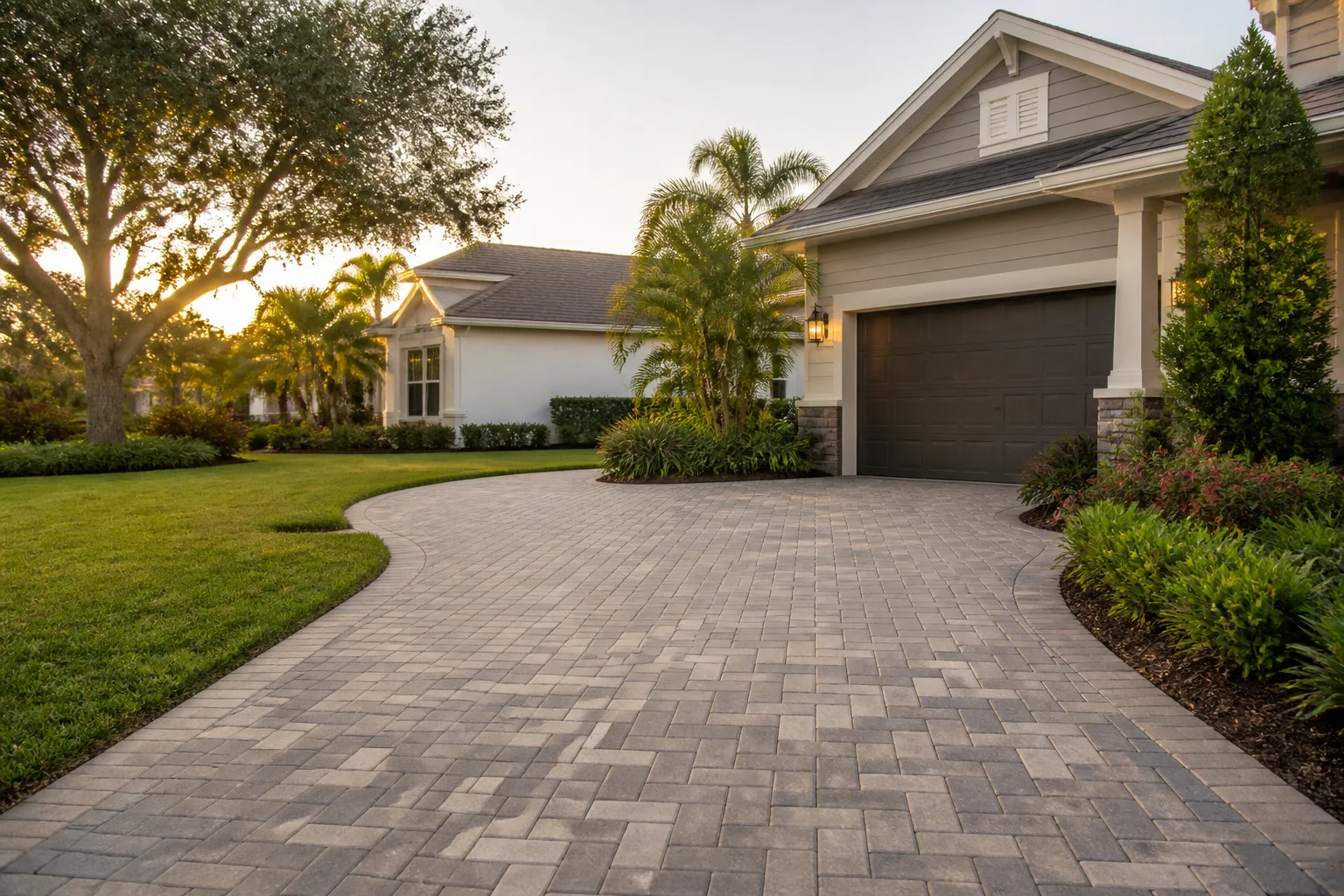
Concrete edge restraint goes in along both sides, pinned and set so the field can’t spread. Then a 1-inch bedding layer of coarse washed sand is screeded dead flat. You’ll pick the paver pattern here: running bond, herringbone, or a basketweave border. Herringbone locks together tighter under a turning tire; running bond lays faster and costs a little less in labor.
Stage 4: Paver installation, cuts, and compaction (days 3 – 4)
Pavers go down, and every cut along the edge, the garage apron, and any curves gets made with a wet saw, not a chisel. Once the field is set, we compact the whole surface with a plate compactor over a rubber mat, which is what seats the pavers into the sand and locks the joints. Expect this to be the loudest day on the job.
Stage 5: Polymeric sand, cleanup, and walkthrough (days 4 – 5)
Joint sand goes in and gets vibrated down until the joints are full, then any haze comes off the surface. We walk the job with you, flag anything that needs a look, and hand over care instructions. That final sweep is also when we point out the two or three pavers most likely to settle first and how to handle them.
Styles & brands we work with
- Kitchen remodeling
- Bathroom remodeling
- Home additions & ADU
- Roofing
- Windows & doors
- Driveway & pavers
- Fence
The Choices You’ll Make: Pavers, Base, and Finish Options
A paver driveway isn’t one product. These are the decisions that actually change what you get, with the honest trade-off on each.
- Concrete pavers vs. clay brick. Concrete pavers are the standard choice for a driveway in The Crossings, because they handle South Florida sun and rain without the spalling clay brick shows after a hard freeze cycle it was never meant for. Concrete runs $7,000 – $18,000 installed on a typical driveway; clay brick pushes to the top of that range and beyond.
- Paver thickness. 60mm is the minimum for a residential driveway; 80mm is what we install for anything that sees a heavy truck or a steep grade. The thicker paver costs more per square foot but resists rutting far better.
- Color and finish. A single solid color is the cheapest and most forgiving over time. Tumbled or blended colors hide tire marks and stains better; a darker charcoal field looks sharp but shows every bit of dust and driveway grit, so it needs a rinse more often.
- Border and banding. A contrasting border tightens the edge visually and adds a modest materials cost. It also gives the eye a line to follow, which helps a wide driveway read as intentional rather than just broad.
- Permeable vs. standard joints. Standard polymeric sand joints are the default. Permeable systems with open-graded joints drain faster and can help with standing water, but they cost more and need periodic re-sanding.
If you’re also redoing the front of the house while the driveway is torn up, homeowners often pair this with Door Installation in The Crossings so the entry and the drive are finished as one exterior package, or with Cabinets & Countertops in The Crossings if the curb appeal push extends inside.
What Paver Driveways Cost in The Crossings, FL
Plan on $7,000 – $18,000 for paver driveway installation in The Crossings. That covers most two-car driveways of 400 to 800 square feet built on a proper base with standard concrete pavers. Five things push a job toward one end of the range or the other:
- Square footage. A 400 sq ft driveway lands near the low end; an 800 sq ft drive with a turnaround or a widened street apron climbs toward $18,000.
- Existing surface and access. Tearing out old concrete adds demo and haul-off. A driveway with a tight gate or a screened enclosure the crew has to work around slows everything down.
- Base depth and soil. Sandy or poorly drained subgrade means deeper excavation, more limerock, and more compaction time.
- Paver grade and pattern. Premium pavers, tumbled finishes, and labor-heavy patterns like herringbone cost more than a standard field in running bond.
- Drainage or grading work. If the driveway needs a swale, a channel drain, or regrading to move water away from the garage, that’s added scope and added cost.
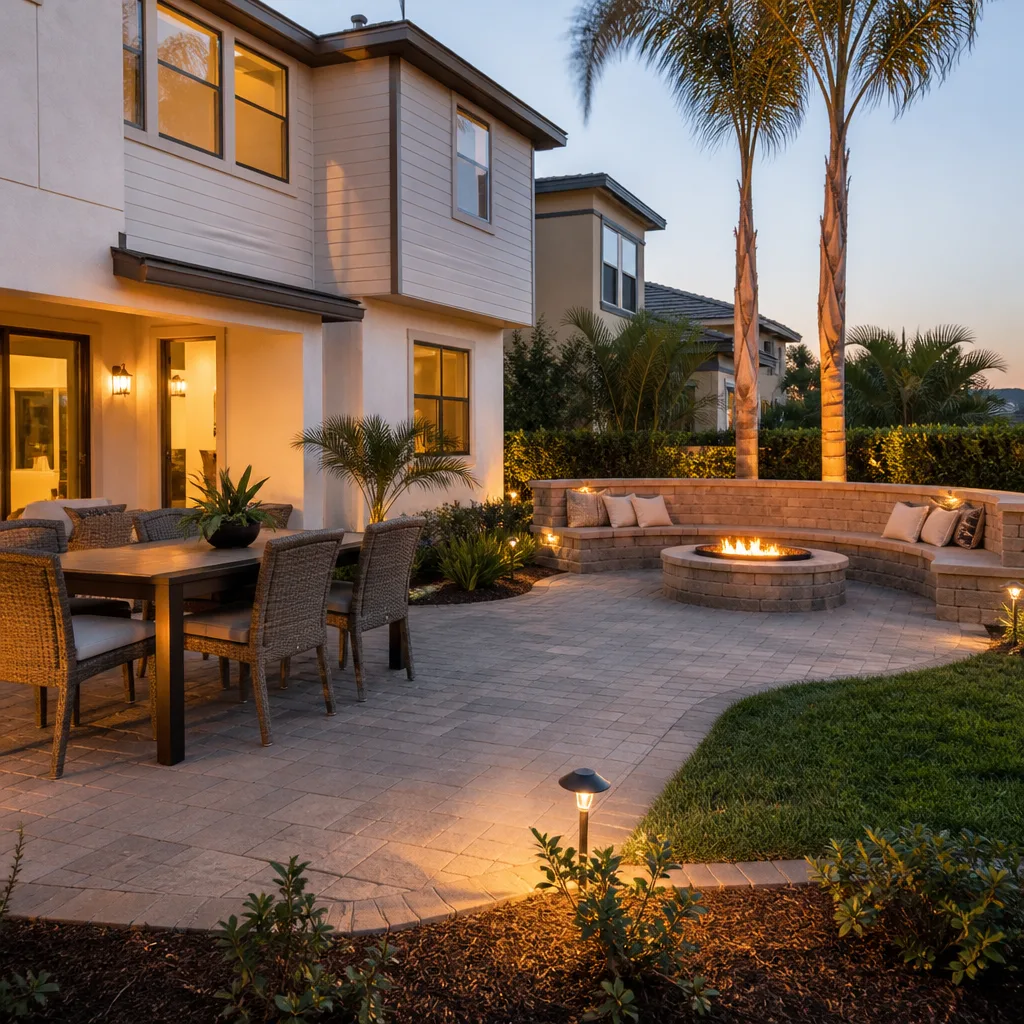
Your written estimate lists the paver type, square footage, base depth, edge restraint, and joint sand as separate line items, so you can see exactly where the money goes. Upfront pricing means the number we quote is the number you pay. What’s not in the base number: irrigation line relocation, HOA architectural-review fees, and any structural repair discovered under the old surface, all of which get quoted separately before we start. The Driveway & Pavers service covers the full range if you’re considering a patio or walkway at the same time.
See the difference
 Before
 After
 Before
 After
 Before
 After
What The Crossings Homes Specifically Do to This Job
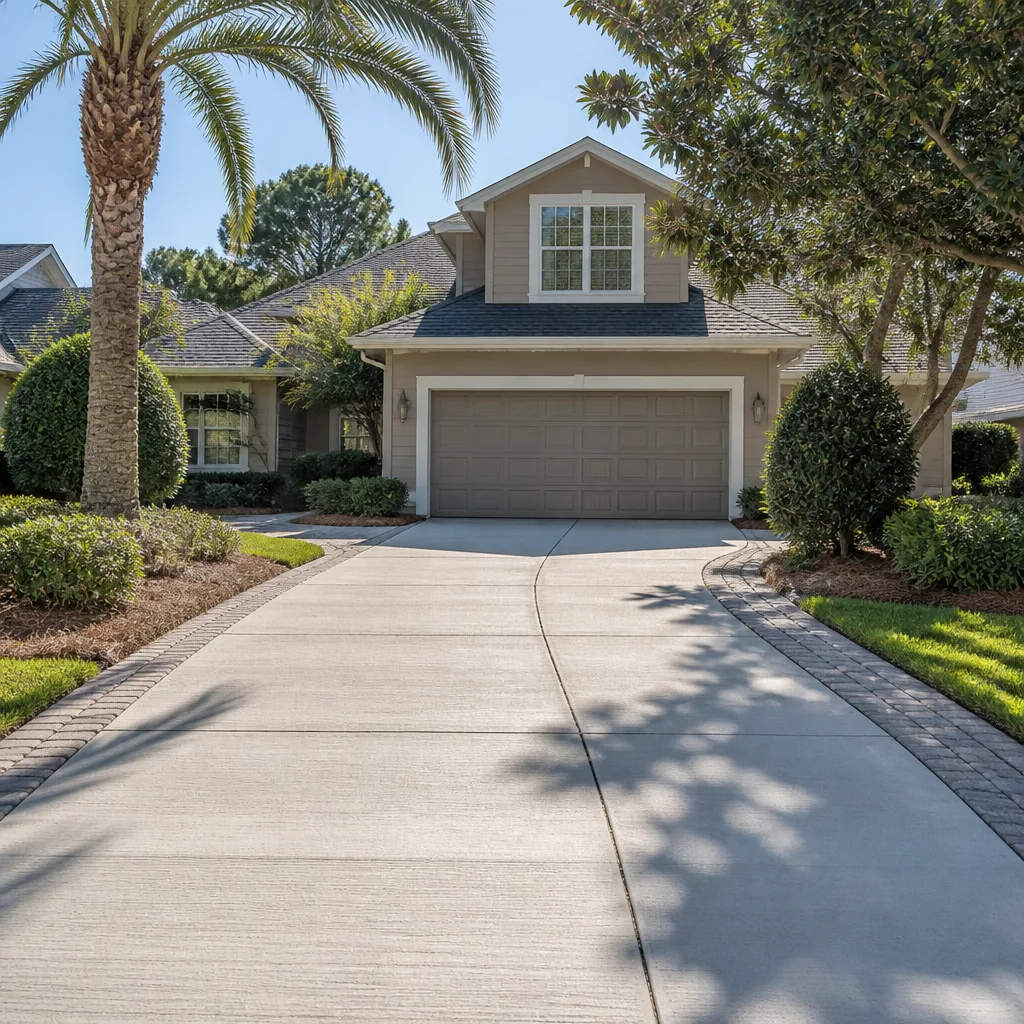
The Crossings is a built-out, master-planned community in west Kendall (ZIP 33186) where nearly every house went up in a tight 1980s – 1990s window. That single fact shapes almost every paver driveway we build here. The original driveways are typically builder-grade concrete that’s now 30-plus years old and cracking at the joints, so most jobs start with a full tear-out rather than an overlay. Miami-Dade’s post-Andrew building code and high-velocity hurricane zone requirements govern permitted work, and any HOA architectural review layers on top of that, which is why we get the approval paperwork moving before demolition. Heavy summer thunderstorms and intense year-round sun mean the base has to drain properly and the joint sand has to be polymeric, not plain. Homes off Southwest 137th Avenue and around the community’s interior streets sit on the same sandy subgrade, and we routinely see old driveways that hold standing water against the garage door during a summer downpour. Fixing that grade is part of the job, not an afterthought. We cover the whole of The Crossings.
Serving The Crossings, FL – Our Local Coverage Area
We serve The Crossings and nearby communities. Use the map below to see the area we cover. If you’re nearby, we can almost certainly help.
Frequently Asked Questions – Paver Driveways in The Crossings
Most paver driveways in The Crossings take 3 to 5 working days from demo to final cleanup, weather permitting. Rain in the summer can add a day or two because the base has to be dry and compacted correctly before pavers go down. We schedule around the rainy season and tell you up front which days are vulnerable.
Often yes, because Miami-Dade County ties driveway work to grading, drainage, and right-of-way rules, and your HOA likely requires architectural review on top of that. We handle the permitting and inspection side for you, and we confirm the requirement for your specific lot before work starts. Call (844) 834-8961 and we’ll tell you what your address needs.
Almost always, yes. A paver driveway is surface and base work, so it doesn’t touch plumbing, electrical, or the house structure unless the old driveway is hiding something. If we uncover an irrigation line or a utility conflict during excavation, we stop and quote the fix before continuing rather than surprising you later.
Expect $7,000 – $18,000 for paver driveway installation in The Crossings, depending on size, base depth, and paver grade. The price doesn’t change once work starts on our jobs: your written estimate is the number you pay, and any added scope gets quoted and approved first. Call (844) 834-8961 for a free exact quote.
Every paver driveway we install is covered by our 730-Day Done Right Promise, one of the longest workmanship guarantees in residential construction. If something isn’t done right, we make it right. The pavers themselves also carry the manufacturer’s warranty, which we walk you through at handover.
Get a Free Paver Driveway Estimate in The Crossings
A paver driveway is a five-day job with a ten-year decision baked into the base. We’ll come out, measure your driveway, look at the soil and drainage, and hand you a written line-item estimate with the paver type and base depth spelled out. If you’re weighing a bigger front-yard project, look at our full Driveway & Pavers in The Crossings. Call (844) 834-8961 and a live person answers, day or night. Estimates are free.
Written by the team at Groundwork Construction Co.