Last updated November 17, 2026







Free written scope consultation - allowances, timeline, and change-order rules on paper before a single trade is scheduled
Bathroom Remodeling Maintenance Schedule: What to Do and When
Most bathroom remodels show their first signs of failure within 18 months. Not because the work was bad. Because nobody handed the homeowner a maintenance plan on day one. We’ve walked into Kendale Lakes bathrooms finished two years ago where the caulk around the tub has already gone black and the grout on the shower floor has started to crumble. The tile is fine. The tile was never the problem. The problem is that South Florida’s humidity works on a finished bathroom every single day, and a bathroom that never gets checked gets quietly eaten from the inside out. This guide gives you a dated, task-specific schedule tied to Kendale Lakes weather, so the $20,000 you spent keeps holding up instead of eroding one skipped caulk line at a time.
Quick Answer
A bathroom remodel needs a 90-day re-inspection first, then a quarterly routine of caulk, grout, drain, and fan checks, with a full re-caulk of wet zones once a year and a deeper sealant refresh every 18 to 24 months. In Kendale Lakes, the ventilation fan check and the annual caulk reseal matter more than anything else on the list because year-round humidity accelerates failure faster here than in dry climates. Miss the fan check and the moisture has nowhere to go but into the wall behind your tile.
Styles & brands we work with
- Kitchen remodeling
- Bathroom remodeling
- Home additions & ADU
- Roofing
- Windows & doors
- Driveway & pavers
- Fence
Table of Contents
- Why South Florida Humidity Accelerates Grout and Caulk Failure
- The 90-Day Re-Inspection: What to Check First
- The Month-by-Month Maintenance Calendar for Kendale Lakes
- The Ventilation Fan Check 80% of Homes Skip
- Settling Cracks vs. Structural Warning Signs
- Maintenance Tasks That Void Manufacturer Warranties If Skipped
- Wet Season vs. Dry Season: Adjusting the Schedule
- What You Can Do Yourself and What You Shouldn’t
Why South Florida Humidity Accelerates Grout and Caulk Failure
Kendale Lakes sits in a climate that most maintenance advice ignores. Relative humidity here runs high most of the year, and the swing between a conditioned bathroom and an unconditioned exterior wall pushes moisture in and out of every seam in the room. That movement is what kills caulk. A caulk bead in a dry climate might flex a few hundred times a year. In Kendale Lakes, that same bead goes through stress cycles daily as shower steam builds up and the room cools back down.
Grout is the other casualty. Cement-based grout is porous. It absorbs a small amount of water every shower, releases it slowly when the room dries, and repeats that process thousands of times over a few years. Add salt air if your home is anywhere near the coast, and the metal components in the room – hinges, drain covers, shower trim – start to corrode on a faster timeline than homeowners expect.
What that means for your schedule
In most of the country, a bathroom can go two or three years between full caulk reseals. In Kendale Lakes, we tell homeowners to plan on annual reseals in the wet zones – the tub rim, shower base, and any seam where tile meets a painted wall. It’s not optional upkeep. It’s the difference between a bathroom that lasts twenty years and one that needs a partial tear-out at year eight.
This is also why the maintenance you do right after a remodel matters so much. A fresh bathroom has clean, tight seams. The first 12 months are when those seams either get cared for or ignored, and the pattern you set in year one usually determines how the room ages. If you’re still in the planning stage and haven’t started the project yet, our guide to bathroom remodeling in Kendale Lakes covers how material choice factors into long-term durability before the first tile is set.
The 90-Day Re-Inspection: What to Check First
Ninety days after your remodel is finished, the bathroom has been through enough use to reveal how everything is settling. This is the inspection almost every homeowner skips, and it’s the most important one. Do it once and it sets the baseline for every check that follows.
What the 90-day check should cover
- Caulk lines: Run a finger along every caulk bead in the room. It should feel smooth and bonded. Any soft spot, gap, or dark discoloration is a signal the bead is failing early – usually from moisture not escaping.
- Grout: Look for hairline cracks, especially along the shower floor and where the wall tile meets the floor tile. Small cracks in corners are normal. Cracks running through the field are not.
- Drain flow: Time how long the shower drains. If it’s noticeably slower than at move-in, you have hair or soap scum building up. Clear it now before it becomes a slow clog that backs up in year two.
- Fan performance: Turn the exhaust fan on and hold a piece of toilet paper near the grille. If it doesn’t pull and hold, the fan isn’t moving enough air. Check the detailed test in the ventilation section below.
- Door and cabinet alignment: Wood and wood-composite doors move with humidity. If doors that closed cleanly at install are now rubbing, the hinges need adjustment before they warp.
- Fixtures and valves: Look under every sink, around the toilet base, and at the shower valve trim for moisture. Any dampness is worth a professional look.
We build this inspection into every project we finish in Kendale Lakes, because catching a failed caulk bead at 90 days costs a tube of caulk. Catching it at year three costs drywall, framing, and a mold remediation. That’s part of what the 730-Day Done Right Promise protects – if anything we installed isn’t holding, we make it right.
The Month-by-Month Maintenance Calendar for Kendale Lakes
Generic seasonal calendars don’t work here because there’s no real winter to slow things down. Kendale Lakes has a wet season that runs roughly May through October and a drier stretch the rest of the year, and the maintenance tasks that matter shift with that pattern. Here’s the calendar we hand to homeowners after a remodel.
January through March
- January: Full caulk inspection in the shower and tub. Reseal anything soft or cracked before the spring humidity climbs.
- February: Deep clean grout with a pH-neutral cleaner. Skip acidic cleaners here – they etch grout and accelerate the exact failure you’re trying to prevent.
- March: Check the exhaust fan grille and clean it. Dust-clogged grilles are one of the most common causes of poor airflow we find.
April through June
- April: Test the fan’s actual airflow (see the ventilation section). Pull the cover and check the duct for disconnection.
- May: Start noticing condensation. If windows fog more than they did last spring, moisture isn’t escaping. Re-check the fan and how long you’re running it.
- June: Inspect the ceiling and upper walls for any discoloration. Early mold shows up as faint staining before it’s visible growth.
July through September
- July: Peak wet season. Re-check every caulk seam monthly during this stretch.
- August: Check the toilet base seal and the supply lines. Rubber washers age faster in high humidity.
- September: Inspect behind the shower valve trim plate. A damp spot there means the seal has failed.
October through December
- October: Wet season ends. This is the ideal month for the annual full re-caulk of wet zones, before the dry air shrinks the seams back.
- November: Re-seal natural stone if you have it. Stone sealant breaks down faster in humidity.
- December: Year-end review. Any item that’s been on your mental to-do list for months gets fixed now or scheduled.
The Ventilation Fan Check 80% of Homes Skip
If we could fix one maintenance habit in Kendale Lakes, this would be it. In our experience, roughly 80% of the homes we walk into have a bathroom exhaust fan that isn’t actually removing moisture – it’s running, it sounds fine, and it’s doing almost nothing. That gap in performance is one of the leading causes of mold growth behind tile, and almost nobody notices until the damage surfaces.
How to check your fan in two minutes
- Turn the fan on and let it run for a minute.
- Tear off a square of toilet paper and hold it near the grille.
- If the paper pulls tight and holds against the grille, the fan has real airflow.
- If the paper droops or falls, airflow is weak.
Why fans fail without breaking
A fan has three failure modes that don’t produce any obvious symptom. The grille gets clogged with dust and paint overspray. The duct behind the fan disconnects, so the fan spins and moves air into the ceiling cavity instead of outside. Or the fan was undersized for the room from day one – builders often install a cheap fan rated for a smaller bathroom than the one it’s serving.
In Kendale Lakes, where the air outside is often as humid as the air inside, an underperforming fan makes conditions worse because the vent acts as a humid-air pathway back in on windy days. The fix is usually a duct check and a replacement fan sized correctly for the room’s cubic footage. Run the fan for at least 20 minutes after every shower, not five.
If you’re at the point where the room needs more than maintenance, our Groundwork Construction Co. of Kendale Lakes home page outlines the full scope of what we handle, including bathroom builds from the studs up.
Settling Cracks vs. Structural Warning Signs
Every newly remodeled bathroom develops some cracks. That’s normal, and one of the most common questions we get is how to tell which ones are harmless. The distinction matters because one type costs a few dollars of caulk and the other signals a problem that gets expensive fast.
Normal settling cracks
- Hairline cracks in caulk or grout at corners where two planes meet
- Cracks along the seam where tile meets a tub or shower base
- Small gaps in grout at door frames and around fixtures
- Any crack that appears in the first year and stops growing
Structural warning signs
- Cracks that run diagonally across a wall or through the field of tile, not just at seams
- Any crack that widens over a few months
- Tile that feels hollow or loose when tapped
- Doors or windows that no longer close straight
- Soft or spongy flooring around the toilet or shower
- Discoloration on the ceiling below the bathroom
Hairline seam cracks you can fix yourself. The second list is where you call us. In Kendale Lakes, we’ve seen a surprising number of bathroom issues that traced back to slab settling, and those need to be addressed at the foundation level, not patched over. If the warning signs are structural, we’ll tell you clearly and give you a straight assessment, no guesswork.
Maintenance Tasks That Void Manufacturer Warranties If Skipped
This is the part of the schedule almost no homeowner knows about until it’s too late. Most premium fixtures come with a manufacturer warranty that requires specific maintenance. Skip those tasks and the warranty can be denied – not because the product failed, but because the maintenance wasn’t done.
What Kohler and Moen expect
Kohler finishes – polished chrome, brushed nickel, and especially the living finishes – need routine cleaning with mild soap and water, no abrasive pads, and thorough drying. Skipping this and letting soap scum and hard water sit on a finish will void the finish warranty faster than any manufacturing defect. Kohler’s finish warranty specifically excludes damage from improper cleaners, and “improper” includes acidic cleaners that are common in bathroom cleaning routines.
Moen faucets are built with cartridges that need periodic flushing, and Moen’s warranty on the cartridge depends on proper installation and normal maintenance. If you’re in a hard-water area of Kendale Lakes, mineral buildup in the cartridge accelerates wear. Flushing the faucet a few times a year with the aerator removed keeps it working and keeps the warranty intact.
Other warranty-sensitive items
- Shower valves: Most require the cartridge to be exercised – turned fully open and closed – periodically. A valve left in one position for years can seize.
- Glass and stone sealants: Many manufacturers require reapplication at recommended intervals. Miss them and the sealant warranty is void.
- Exhaust fans: Fan warranties in most cases require keeping the unit clean and the grille free of obstruction.
We keep the manufacturer documentation from every product we install – Kohler, Moen, and the rest – and can help you pull the exact maintenance requirements for your fixtures. It’s part of the paperwork we hand over at final walkthrough.
Wet Season vs. Dry Season: Adjusting the Schedule
The schedule above works year-round, but it’s worth understanding how the two seasons in Kendale Lakes change the stakes. Our wet season – roughly May through October – brings afternoon storms, high humidity, and the kind of moisture load that a bathroom fan has to work hard to keep up with. Our dry season is milder but not dry in the way people from other parts of the country imagine.
Wet season adjustments
During the wet months, run your exhaust fan longer after showers – 30 minutes instead of 20. Check your caulk lines monthly instead of quarterly. Pay extra attention to condensation on windows and mirrors, because that’s your visible indicator of moisture load. If you start seeing condensation on interior walls during a shower, the room is telling you airflow is insufficient.
Dry season adjustments
The drier months are for bigger maintenance jobs. October is the ideal month for the annual full re-caulk because the seams have had all season to move. Re-seal natural stone in November. Schedule any professional inspection or repair work in November or December when contractor schedules open up, and the bathroom is under less moisture stress. If you’ve been considering a professional waterproofing check or a bigger retrofit, this is the window.
If your remodeling or maintenance work is expanding into other parts of the home – say you’re planning to tie the bathroom into a larger addition – our team also handles home additions & ADU in Kendale Lakes as part of the same service line.
What You Can Do Yourself and What You Shouldn’t
We’re not going to tell you every maintenance task needs a professional. Plenty of this schedule is designed to be homeowner-friendly, and you should absolutely do those tasks yourself. But some of them are genuinely dangerous to attempt, and the cost of a mistake there is far higher than calling someone in.
Safe DIY tasks
- Cleaning the fan grille
- Checking caulk and grout for cracks
- Re-sealing simple caulk lines with the right product
- Testing fan airflow with the toilet-paper check
- Flushing faucet aerators
- Cleaning with pH-neutral products
Call a professional for these
- Anything involving the exhaust fan’s electrical connection or the duct behind it. The fan motor and duct work sit in a space that combines electricity and rough access. A disconnection or a poorly sealed duct is a job for someone with the right tools and training, and the fan wiring specifically should not be touched by an untrained hand.
- Anything involving the shower valve internals. The valve cartridge lives behind the wall and requires shutting off the water supply. A mistake there causes a leak inside the wall that you won’t see until it’s expensive.
- Any tile work beyond re-sealing. Remove a single tile carelessly and you can crack its neighbors and compromise the waterproofing membrane underneath.
- Any hint of structural movement. If you’re seeing the warning signs from the section above, don’t patch and wait. Have it looked at.
We can walk you through the safe tasks during a free project estimate, and if you need help in other parts of the property, we also handle fence installation in Kendale Lakes and driveway & pavers in Kendale Lakes, which share the same maintenance mindset.
Common Mistakes to Avoid
- Using bleach or acidic cleaners on grout. It’s the standard cleaning product in most homes, and it’s also the fastest way to dissolve the top layer of grout and open it up to water. pH-neutral is the rule, especially on a bathroom that’s less than five years old.
- Caulking over old caulk. New caulk doesn’t bond to old caulk, and a second layer traps moisture against the substrate. Strip the old bead completely, clean the seam, and start fresh. We see this in Kendale Lakes homes all the time and it’s almost always the reason a “repaired” seam fails again in a few months.
- Skipping the fan check because the fan “still runs.” A running fan isn’t a working fan. The toilet-paper test takes two minutes, and skipping it lets mold develop behind tile for years before it shows.
- Assuming every crack is normal. Some are. Some are the first sign of a settling slab. The difference matters, and assuming everything is settling is how a structural problem gets to the expensive stage.
- Ignoring the manufacturer maintenance schedule. Kohler and Moen warranties have conditions. Skip them and the warranty on the finish or cartridge may be denied, not because the product failed, but because the required care wasn’t provided.
- Cleaning with abrasive pads or scouring sponges. Scouring pads scratch finishes permanently. A scratched finish can’t be polished out, and it gives water and soap scum a place to grab hold.
- Doing the annual full re-caulk in the middle of wet season. Caulk needs a dry window to cure properly. October is the right month. Doing it in June often means doing it twice.
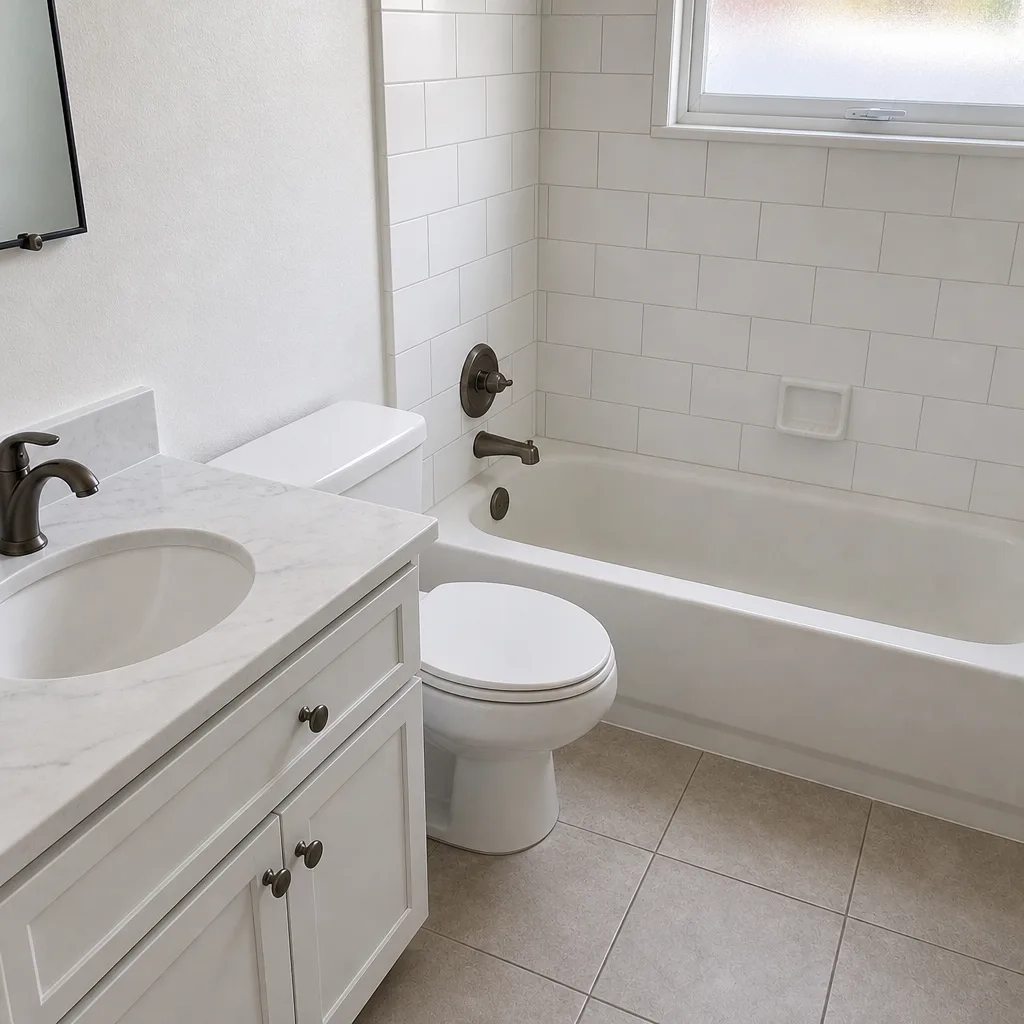
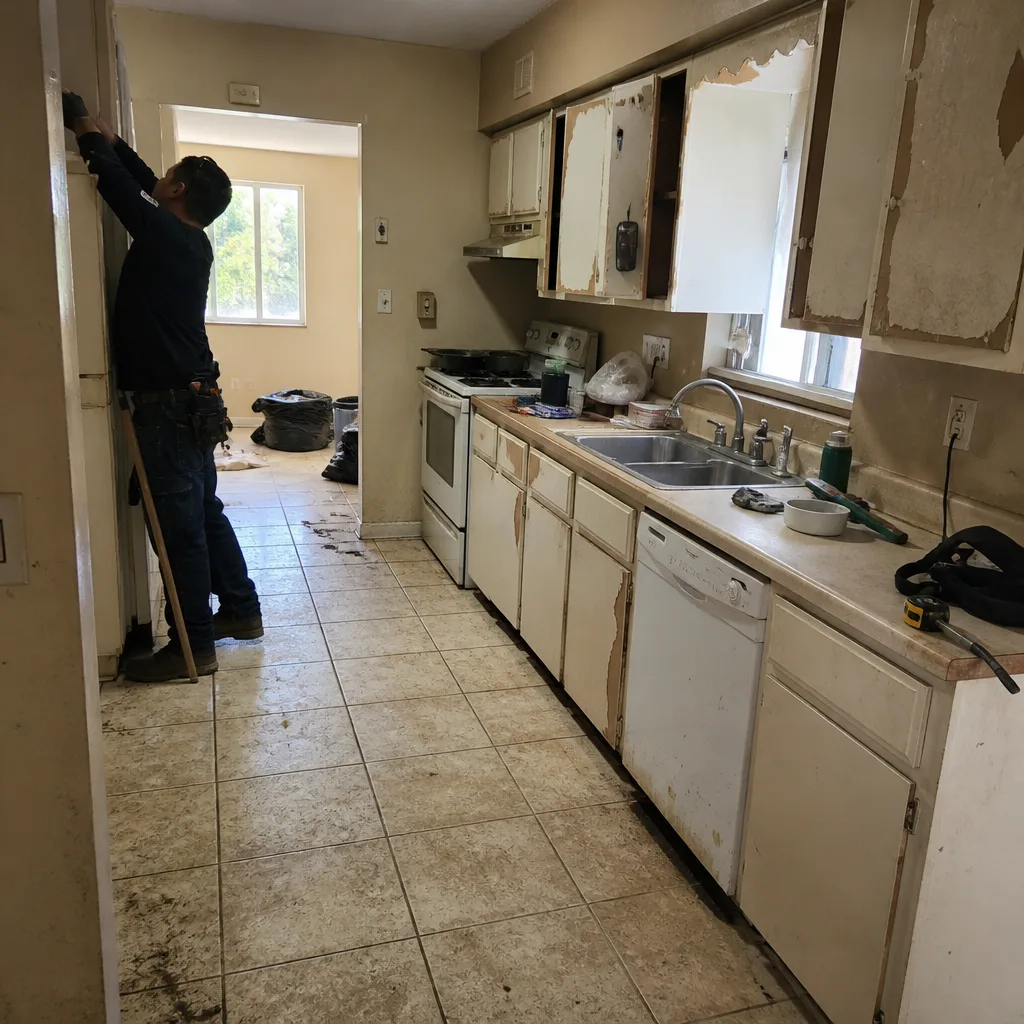
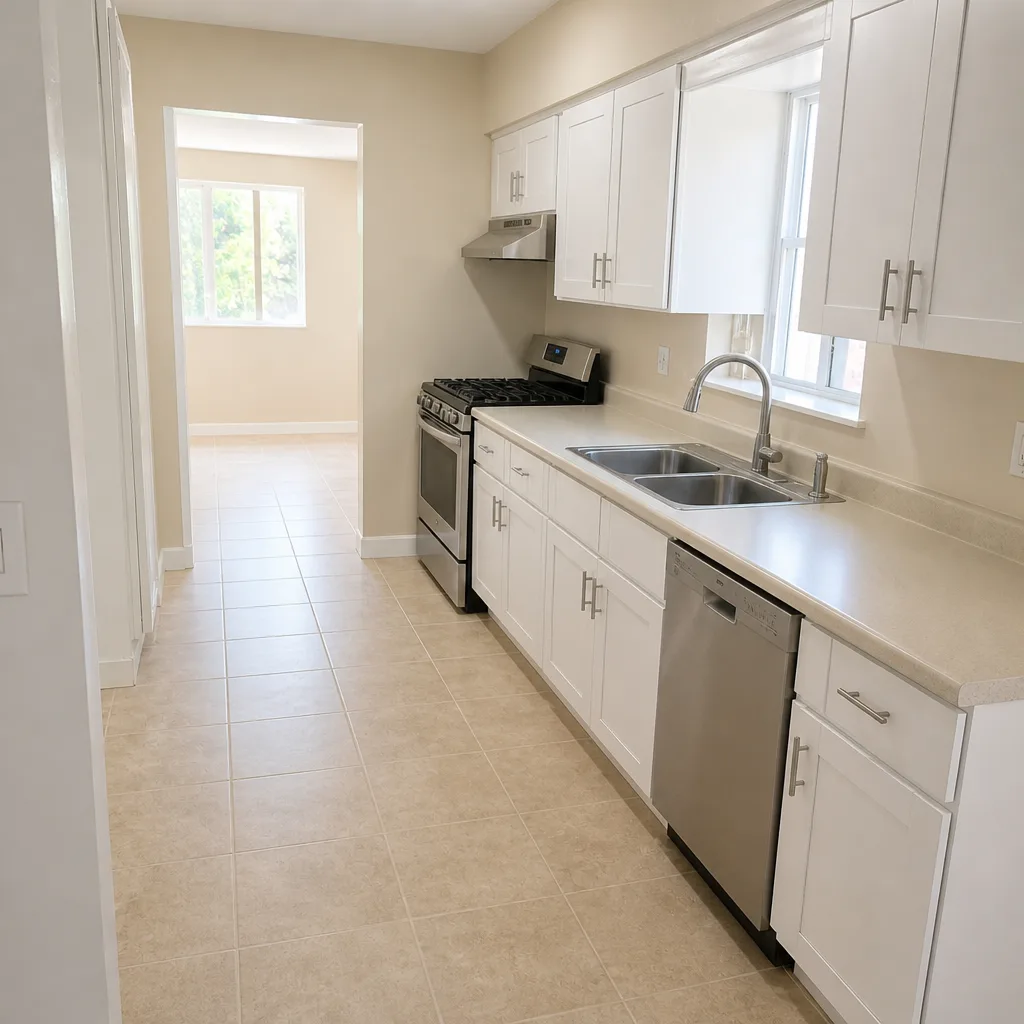
See the difference
 Before
 After
 Before
 After
 Before
 After
When to Call a Professional
Call a professional if you see any of the following: a crack that runs diagonally across a wall or widens over time, tile that feels hollow when tapped, soft flooring around the toilet or shower, or moisture staining on the ceiling below the bathroom. Call if your fan fails the toilet-paper test and cleaning the grille doesn’t fix it – that points to a duct or wiring issue you shouldn’t handle yourself. Call if a shower valve cartridge is leaking behind the wall, if the waterproofing membrane is suspect, or if the sealant failure is widespread enough that a full strip-and-reseal is beyond a weekend project. And call if the bathroom is nearing the end of its service life and the maintenance is starting to feel like walking a tightrope – sometimes the straight answer is that maintenance is no longer the cheaper option. Groundwork Construction Co. of Kendale Lakes offers free estimates in Kendale Lakes – call (844) 834-8961. The team also handles roofing in Kendale Lakes and windows & doors in Kendale Lakes if the water damage has started to travel.
Frequently Asked Questions

Ninety days after the final walkthrough. That’s long enough for the bathroom to experience real use and for materials to settle, but early enough to catch and fix failing caulk or grout before it becomes a moisture problem. The 90-day check should cover caulk lines, grout, drain flow, fan performance, door alignment, and a moisture inspection under every sink and around the toilet base.
Once a year in the wet zones, and more often if you see any soft spots during a quarterly inspection. Kendale Lakes humidity accelerates caulk failure faster than in drier climates, so the annual reseal is the baseline, not a nice-to-have. October is the best month because the seams have had a full season to move and the drier air gives the new caulk a good cure window.
Hold a square of toilet paper against the grille while the fan is running. If it pulls and holds, the fan has working airflow. If it droops or falls, the fan is failing to move air, and that’s usually caused by a clogged grille, a disconnected duct behind the fan, or an undersized fan. Clean the grille first, then call a professional if airflow is still weak.
Corner cracks where two planes meet, and hairline cracks in the caulk at the tub or shower base, are normal settling. Diagonal cracks that run through the field of tile, tile that feels hollow, or any crack that widens over a few months is a warning sign worth inspecting. In Kendale Lakes, we’ve found that slab movement is the underlying cause in a surprising number of structural warning signs, so don’t assume it’s settling without checking.
For Kohler, skipping routine cleaning with mild soap and water and using abrasive or acidic cleaners can void the finish warranty. For Moen, failing to flush the faucet cartridge periodically – especially in a hard-water area – can void the cartridge warranty. Most manufacturer warranties have maintenance conditions buried in the fine print, and the product documentation that comes with your fixtures lists the exact requirements.
No – quarterly inspections are what tell you whether the annual reseal is enough. Skipping inspections means you find out about a failed caulk bead or a fan problem when it’s already caused damage, usually behind the tile. The inspections are quick. Fifteen minutes four times a year is a much smaller cost than a mold remediation in Kendale Lakes.
The Bottom Line
A bathroom remodel holds up when you treat it like a system that needs care, not a finished product that stays finished. The core schedule is simple: run the 90-day re-inspection, check the wet-zone caulk quarterly, do a full annual reseal in October, test the exhaust fan every season, and watch for structural warning signs. In Kendale Lakes, that schedule gets compressed by humidity, so the fan check and the caulk reseal deserve more attention than the generic advice would suggest. Do the safe tasks yourself. Call a pro for the electrical, the valve internals, and anything that looks structural. And keep the manufacturer documentation – Kohler and Moen warranties depend on the care you give your fixtures.
Every project we finish is backed by the 730-Day Done Right Promise – if it’s not done right, we make it right. Calls are answered by a live person 24/7, technicians are background-checked and arrive in uniform, and pricing is upfront with no surprises: the number you see is the number you pay. Free project estimate and design consult, $1,000 off projects over $10,000, and 0% financing for 18 months are available on qualifying work. Call (844) 834-8961 to schedule your free estimate with Groundwork Construction Co. of Kendale Lakes.
Written by the team at Groundwork Construction Co. of Kendale Lakes.