Last updated November 17, 2026


Free written scope consultation - allowances, timeline, and change-order rules on paper before a single trade is scheduled
Fence Installation Warning Signs Every Homeowner Should Know
Most bad fence jobs look perfect the day the crew drives away. Posts are straight, pickets are even, the gate swings clean. Then hurricane season arrives, and the whole thing folds over like a house of cards. In our experience across Kendale Lakes, the contractors worth worrying about aren’t the ones who do obviously sloppy work. They’re the ones who skip the parts you can’t see: the permit, the footing depth, the wind-load anchoring. A fence installed without a Miami-Dade approved permit isn’t just a code violation. It’s a liability that can void your homeowner’s insurance claim after a storm and force a full tear-down at your expense. This guide shows you how to catch the warning signs before, during, and after installation.
Quick Answer
The biggest fence installation warning signs are no verifiable contractor license, verbal-only quotes with no written scope, and no mention of permits. In South Florida, the deadliest sign is a fence built without a Miami-Dade product approval or an inspection on record. A fence that skips those steps can pass a visual glance on day one and still fail at 110 mph, leaving you with the replacement bill and a denied insurance claim. Verify the license, demand a written quote that names the permit, and confirm the inspection in Miami-Dade’s public records.
Styles & brands we work with
- Kitchen remodeling
- Bathroom remodeling
- Home additions & ADU
- Roofing
- Windows & doors
- Driveway & pavers
- Fence
Table of Contents
- Pre-Hire Red Flags: What to Check Before You Sign
- How to Verify a Miami-Dade License Before You Hire
- Why Permits Matter More Than the Fence Itself
- During-Installation Warning Signs Specific to South Florida
- What a Failed Wind-Load Test Looks Like Before the Storm
- The 15-Minute Post-Installation Structural Check
- How to Confirm the Permit Was Actually Pulled and Inspected
- What Happens If the Fence Fails Inspection
Pre-Hire Red Flags: What to Check Before You Sign
The warning signs start long before a single post goes in the ground. In Kendale Lakes, we’ve watched homeowners get burned by crews who show up polished and priced low, then disappear the moment something goes wrong. The pattern is predictable once you know what to look for. Every legitimate fence contractor should clear these checks without hesitation.
- No license number on the quote. A real contractor puts their state and county license number on the paperwork. If it’s missing, ask. If they deflect, walk away.
- Verbal-only pricing. A number spoken at the kitchen table means nothing when the job goes sideways. Insist on a written, line-item quote that names materials, footage, post spacing, and whether the permit is included.
- No mention of permits. In Miami-Dade, fences over a certain height and all fences in certain zones require a permit and inspection. A contractor who never brings it up is either cutting corners or doesn’t know the code.
- Large cash deposit, no contract. A request for half or more in cash with nothing in writing is a classic setup for a vanishing act.
- No verifiable address or references. Ask for two recent jobs in the Kendale Lakes area you can drive past. A crew that can’t point to a single local install is a gamble.
- Pressure to sign today. “This price is only good until Friday” is a sales tactic, not a construction reality. Legitimate builders give you room to think.
None of these individually is fatal. Two or three together is a pattern, and the pattern is what costs you money. Our team at Groundwork Construction Co. of Kendale Lakes home puts the license, the scope, and the permit status in writing before you commit, because vague bids are exactly how homeowners end up paying twice for one fence.
How to Verify a Miami-Dade License Before You Hire
A contractor’s license is the first thing to check and the easiest to fake with a confident tone. In Florida, fence installation and general contracting require the right license class for the scope of work, and Miami-Dade County maintains public records you can search in minutes. Don’t take a business card at face value. Verify it yourself.
- Get the license number in writing. Ask for the state or county license number and the exact name it’s registered under. The name on the license must match the name on your contract.
- Search Florida’s DBPR database. The Department of Business and Professional Regulation lets you look up contractor licenses by number or name. Confirm the status is “Current” and “Active.”
- Cross-check Miami-Dade County records. The county maintains its own contractor licensing records. A state license doesn’t automatically mean local eligibility for permitting.
- Ask for a certificate of insurance. Request the certificate of insurance directly from the insurer, not a photocopy from the contractor. Confirm general liability and workers’ comp are both active.
- Look for complaints or disciplinary history. The same databases show disciplinary actions. A pattern of complaints is a warning sign worth taking seriously.
This takes fifteen minutes. It’s the cheapest insurance you’ll ever buy on a project. In Kendale Lakes, where homes sit close together and shared property lines are common, an unlicensed crew that damages a neighbor’s wall or fence leaves you holding the claim. Verify first, hire second.
Why Permits Matter More Than the Fence Itself
Here’s the counterintuitive part: the fence material matters less than the paperwork behind it. Miami-Dade has some of the strictest wind-load requirements in the country, tightened after Hurricane Andrew. Those requirements exist because fences become projectiles in a storm. A permit and inspection confirm the posts are deep enough, the concrete footings are sized right, and the panels are anchored to a system rated for the wind zone. Skip that step and you’re building a sail, not a fence.
A proper fence permit in Miami-Dade typically involves more than a form. The county will want to see:
- Product approval. Fence systems and materials must carry a Miami-Dade Notice of Acceptance (NOA) or an approved product listing for wind resistance.
- Post depth and footing specs. The engineering behind each post, including depth below grade and concrete footing dimensions, matters far more than the height above ground.
- Panel attachment details. How rails, pickets, and panels connect determines whether the whole system holds under lateral wind load.
- Site plan and property line verification. In dense Kendale Lakes neighborhoods, the county checks setbacks and shared lines before approving.
If a contractor’s quote doesn’t name the permit, that’s the single loudest warning sign in this entire guide. When you’re ready to see what a properly permitted install looks like, our Fence Installation in Kendale Lakes page lays out the full scope, including the permit and inspection steps other quotes leave out.
During-Installation Warning Signs Specific to South Florida
During installation, watch the work like you’ll have to live behind it for the next twenty years, because you will. South Florida’s wind resistance requirements are where cutting corners hides, and the shortcuts are visible if you know where to look. These are the ones we see most often in and around Kendale Lakes.
- Shallow posts. Ask the crew how deep they’re setting each post. In this wind zone, posts set too shallow are the most common failure point. If they can’t tell you, that tells you something.
- Concrete footings that are too small or missing. Posts need a properly sized concrete footing, not just a scoop of rubble. Peek at a hole before it’s filled. A too-small, dry, or absent footing is a red flag.
- Panels attached without the specified fasteners. Look at the rails and how the panels connect. Missing screws, wrong fasteners, or panels nailed rather than bolted are shortcuts that fail under load.
- Fence line that skips the property line check. In Kendale Lakes, lots sit close together. A crew that doesn’t confirm the shared property line is one boundary dispute away from a fence you have to move.
- No permit number posted or mentioned. A permitted job should have documentation the crew can point to. If the permit was “handled,” ask for the number on the spot.
- Rushed digging and set. Concrete needs time to cure. A crew that sets posts and hangs panels the same afternoon without proper set time is trading your longevity for their schedule.
None of these are things you can check from your kitchen window. Walk the job line at lunch, ask one or two direct questions, and take photos of the footing holes before they’re filled. Real professionals expect it.
What a Failed Wind-Load Test Looks Like Before the Storm
A fence that will fail under wind load doesn’t hide until the storm. It broadcasts its weakness on a calm day, and you can read the signs without any tools. The problem is most homeowners don’t know what to look for until it’s too late. Kendale Lakes sits squarely in a high-wind zone, so these issues aren’t hypothetical.
- Wobbly posts when pushed. Lean your weight into a post at chest height. A properly set post in a real footing won’t move. If it shifts at all, the footing or the depth is wrong.
- Sagging top rails. Run your eye down the top rail. Any dip between posts means the spans are unsupported or the posts are settling, both of which spell failure under lateral load.
- Loose or missing fasteners. Walk the line and check screws and bolts. Missing fasteners or ones that spin freely mean the panels aren’t locked to the frame.
- Panels that rattle or flex. Push against a panel. A little flex is normal; a lot means the panel attachment doesn’t meet the wind spec.
- Uneven gaps between posts. If spacing varies, the posts were eyeballed, not measured, and the whole system is out of square.
- Leaning or twisting in a light breeze. In South Florida, a fence that moves in a normal afternoon wind will not survive a named storm.
A fence with two or three of these signs is a fence that already failed its wind-load test. The only question is whether you discover it with a screwdriver on a Saturday or with your insurance adjuster after a storm. Catching it now means an Home Additions & ADU in Kendale Lakes project can proceed with a fence you can actually count on at the property line.
The 15-Minute Post-Installation Structural Check
You don’t need a toolbox for this. You need fifteen minutes and a critical eye. Run this check the same week the crew finishes, while the job is still fresh and the contractor still has a reason to make it right. A fence that passes this test in Kendale Lakes is one that has a fighting chance in hurricane season.
- Walk the full line and push each post. Grab every post at chest height and apply steady pressure. None should move. Not one.
- Check every fastener by eye and finger. Confirm each screw and bolt is present and tight. Look specifically at rail-to-post connections and panel attachment points.
- Sight down the line for lean and sag. Stand at one end and look down the fence. Posts should be straight and rails even. Any dip or lean is a structural signal.
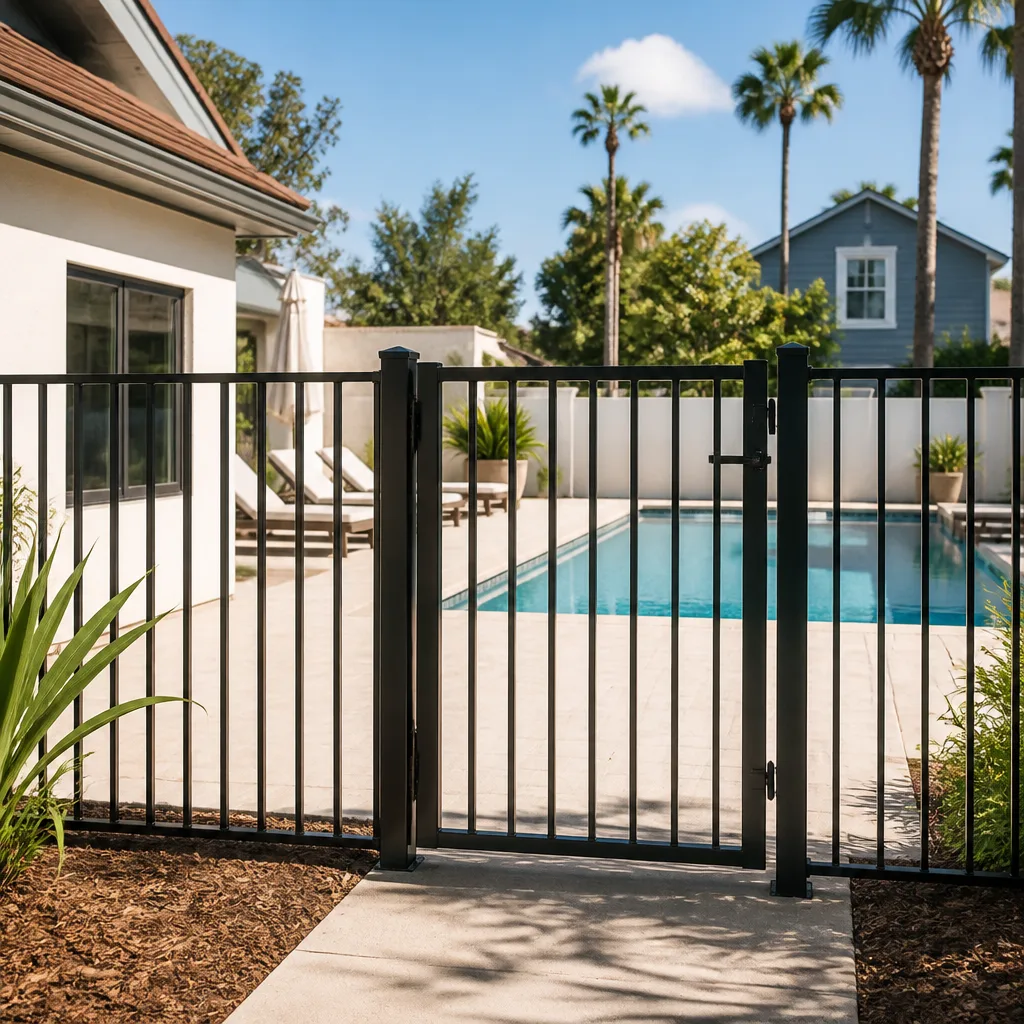
- Open and close the gate several times. A well-installed gate swings freely and latches cleanly. A gate that drags or binds means the posts aren’t plumb or the hinges are wrong.
- Confirm the permit and inspection documentation. The crew should leave you with the permit number and, once inspected, proof the work passed. Don’t accept a verbal “all set.”
- Look for settling around the posts. Within the first week, check the ground at each post for soft soil, gaps, or sinkage, which signal footing problems.
If everything passes, you’re in good shape. If something fails, report it in writing while the job is under warranty. That’s the whole reason the 730-Day Done Right Promise matters: if it’s not done right, it gets made right, and you have the paper trail to enforce it.
How to Confirm the Permit Was Actually Pulled and Inspected
“We pulled the permit” is a sentence, not proof. In Kendale Lakes and across Miami-Dade, the county’s public records portal lets you verify a permit exists and that the inspection actually passed. This is the single most valuable check in this guide, because it’s the one a shoddy contractor can’t fake.
- Ask for the permit number in writing. Get the number before the job starts, not after. It should match the address and the scope.
- Search Miami-Dade’s online permit portal. The county’s e-permitting system lets you search by address or permit number. Enter the address and confirm a permit exists.
- Confirm the permit type and status. Verify it’s the right permit for a fence and that the status shows the correct stage: issued, inspected, or final.
- Check the inspection history. Look for the inspection record itself. A permit that was pulled but never inspected isn’t finished work.
- Get the inspection result on record. The portal shows whether the inspection passed. If it’s “pending” or “failed,” the job isn’t done.
- Keep copies. Save the permit number and the passed inspection record with your home documents. It matters if you ever sell or file an insurance claim.
If a contractor can’t provide a permit number that resolves to a real, inspected record, that’s not a paperwork slip. It’s the difference between a fence and a liability. Verify it the way you’d verify any other major purchase on your home.
What Happens If the Fence Fails Inspection
A failed inspection isn’t a small administrative problem. It freezes the project, and in Miami-Dade a fence built without a permit and proper inspection can be subject to a stop-work order, correction notice, and eventual removal at the owner’s expense. A fence that fails carries consequences that outlast the contractor.
- The fence may need to come down. If the posts, footings, or product approvals don’t meet code, the county can require removal before a new permit is issued.
- Your insurance claim may be denied. After a storm, an adjuster who finds an unpermitted fence may exclude storm damage to it. That’s the liability that voids your claim.
- The contractor may disappear. A crew that cut corners on the permit is the least likely to return when inspection fails. That’s when you find out their license number was never real.
- You cover the cost of the fix. With no warranty and no license to protect, you pay for the tear-down and rebuild yourself.
- Resale complications. An unpermitted structure can hold up a home sale or trigger a disclosure requirement in Kendale Lakes and across Miami-Dade.
When you’re building or rebuilding a fence line, the Driveway & Pavers in Kendale Lakes work often comes up alongside it, and both need the same discipline around permits and inspection. The point is simple: a properly permitted install is your protection against every scenario on this list.
Common Mistakes to Avoid
- Hiring on price alone. The lowest bid is usually the one that skips the permit and the footing depth. In Kendale Lakes, that savings evaporates the first time a storm rolls through.
- Accepting a verbal quote. A spoken number is unenforceable. Get a written, line-item quote that lists materials, footage, post spacing, and permit handling.
- Never verifying the license. A confident contractor with no verifiable license is one bad job away from leaving you holding the claim. Check the DBPR and Miami-Dade records first.
- Forgetting to confirm the permit was inspected. Pulling a permit and passing inspection are two different things. Check the county portal for the passed inspection record, not just the permit number.
- Skipping the 15-minute check. The week after installation is when the contractor still answers. Wait a year, and you’re the one making the problem right.
- Ignoring property lines. In dense Kendale Lakes neighborhoods, a fence built without confirming the shared boundary can trigger a dispute and a forced relocation.
- Assuming the fence is “just a fence.” In a high-wind zone, it’s a structure with engineering behind it. Treat the permit and wind-load requirements accordingly.
See the difference
 Before
 After
 Before
 After
 Before
 After
When to Call a Professional
Some of these warning signs you can check yourself in an afternoon. Others require expertise you shouldn’t fake. Call a professional when a contractor can’t produce a license number or a permit, when a finished fence moves under hand pressure, when panels or posts look wrong after a storm, or when a failed inspection leaves you with a structure that needs rebuilding to code. In Kendale Lakes, Groundwork Construction Co. of Kendale Lakes offers free estimates and will walk you through the permit and inspection process before any work starts. Our technicians have up to 12 years of experience, all projects carry the 730-Day Done Right Promise, and you’ll get a written, upfront price with no surprises. If you’re unsure whether a fence was done right, a second set of expert eyes is the fastest way to find out. Call (844) 834-8961 to schedule your free estimate.
Frequently Asked Questions
No mention of a permit is the biggest single warning sign. In Miami-Dade, a fence built without a permit and inspection can void your insurance claim and force removal at your expense. If the quote doesn’t name the permit and the inspection, treat it as a red flag and get a written scope before you sign. Call (844) 834-8961 for a free estimate – we’ll show you exactly what the permit process looks like in Kendale Lakes.
Search Miami-Dade’s online permit portal using your address or the permit number and confirm the inspection record shows a pass. A permit that was pulled but never inspected isn’t finished work. Ask the contractor for the permit number before the job starts, not after, and keep the passed inspection record with your home documents. Call (844) 834-8961 if you want us to walk you through what to look for – estimates are free.
Yes. A fence that will fail under wind load shows it on a calm day through wobbly posts, sagging top rails, missing fasteners, and panels that rattle or flex. In Kendale Lakes, sit squarely in a high-wind zone, so run the 15-minute check the week after installation. A fence with two or three of these signs already failed – get it inspected before storm season. Call (844) 834-8961 for a free estimate on making it right.
It can. After a storm, an adjuster who finds an unpermitted fence may exclude damage to it, leaving you to cover the replacement yourself. That’s the liability behind the permit requirement, and it’s why we verify permits and inspections on every job. A properly permitted, inspected install is your protection. Call (844) 834-8961 for a free estimate – we pull the permit and confirm the inspection passes.
That depends on the fence system, its Miami-Dade product approval, and the wind zone, and the correct depth and footing specs come from the approved engineering, not a rule of thumb. That’s why the permit and inspection matter: they confirm the posts are deep enough and the footings are sized right. Ask any contractor to show you where their post depth meets the approved spec. Call (844) 834-8961 for a free estimate – we’ll explain the spec before work starts.
Report it to the contractor in writing immediately and ask for the failed inspection record and a plan to correct it. If the contractor can’t or won’t return, you’re likely looking at a rebuild with a licensed professional. In Kendale Lakes, a failed inspection can also require removal before a new permit is issued. Call (844) 834-8961 for a free estimate – we’ll assess what needs correcting and give you a written, upfront price.
The Bottom Line
The fence itself is the visible part. The parts that decide whether it survives a storm are the license, the permit, the post depth, the footings, and the inspection record, none of which you can judge from a distance. Kendale Lakes homeowners who check those five things before, during, and after installation avoid the classic failure that only shows up after hurricane season. Keep the 15-minute structural check on your calendar, verify the permit in the county portal, and never accept a verbal-only quote. A fence that passes all of that is built to last and backed in writing. If anything on this list raised a flag on your own fence, call (844) 834-8961 for a free estimate with Groundwork Construction Co. of Kendale Lakes. Upfront pricing, no surprises, and the 730-Day Done Right Promise behind every job.
Written by the team at Groundwork Construction Co. of Kendale Lakes.