Last updated November 17, 2026



Free written scope consultation - allowances, timeline, and change-order rules on paper before a single trade is scheduled
How Long Does Driveway & Pavers Take? Timelines and What to Expect
A standard two-car driveway replacement takes 3 – 5 days in ideal conditions. In Kendale Lakes, “ideal conditions” means no permit delays, no buried irrigation lines, and no afternoon thunderstorms. Plan for 7 – 10. That gap between the contractor’s day-one estimate and the calendar you actually live through is where most homeowners get blindsided. This guide pulls back the curtain on every phase of a driveway and paver project: the permit window at Miami-Dade, the demo and haul-off, base prep, paver setting, jointing, and sealing. We’ll show you what genuinely adds days on a South Florida project and how to protect your schedule before the first shovel hits the ground in Kendale Lakes.
Quick Answer
A driveway and paver installation in Kendale Lakes typically takes 7 – 10 working days from permit approval to final seal, though the work itself is only 3 – 5 of those days. Add 2 – 6 weeks for Miami-Dade County permit review before any dirt moves. Weather holds during the May – October rainy season, buried utilities, and unexpected soil conditions are the three biggest schedule-killers on real projects.
Styles & brands we work with
- Kitchen remodeling
- Bathroom remodeling
- Home additions & ADU
- Roofing
- Windows & doors
- Driveway & pavers
- Fence
Table of Contents
- The Full Phase-by-Phase Timeline
- Miami-Dade Permit Timelines and Why They Swing
- Weather Holds: How the Rainy Season Rewrites Your Schedule
- The Hidden Timeline Killers Under Your Driveway
- How to Structure a Contract That Protects Your Timeline
- How Material Choice Changes the Clock
- Living Through a Driveway Project
- Common Mistakes to Avoid
The Full Phase-by-Phase Timeline
Here’s what a realistic schedule actually looks like on a Kendale Lakes driveway project. These are working days, and they assume a permit is already in hand and the weather cooperates. We’ve seen every one of these phases stretch on real jobs, and we’ve seen them run tight when the pre-work was done right.
- Permit pull and site review (2 – 6 weeks, before day one). Miami-Dade County requires a right-of-way or driveway permit for new and replacement approaches, and a grading or site plan review for significant changes. Approval time depends heavily on how complete and clean the submittal package is.
- Demo and haul-off (1 – 2 days). Tearing out the old surface, loading it onto trucks, and clearing the sub-base. A standard two-car drive is usually a single day of demo plus a half day of hauling.
- Base prep and grading (1 – 2 days). Excavating to depth, compacting the subgrade, and laying the crushed limestone or stabilized base. This phase sets the whole lifespan of the driveway, so it’s the one place we never let a schedule dictate shortcuts.
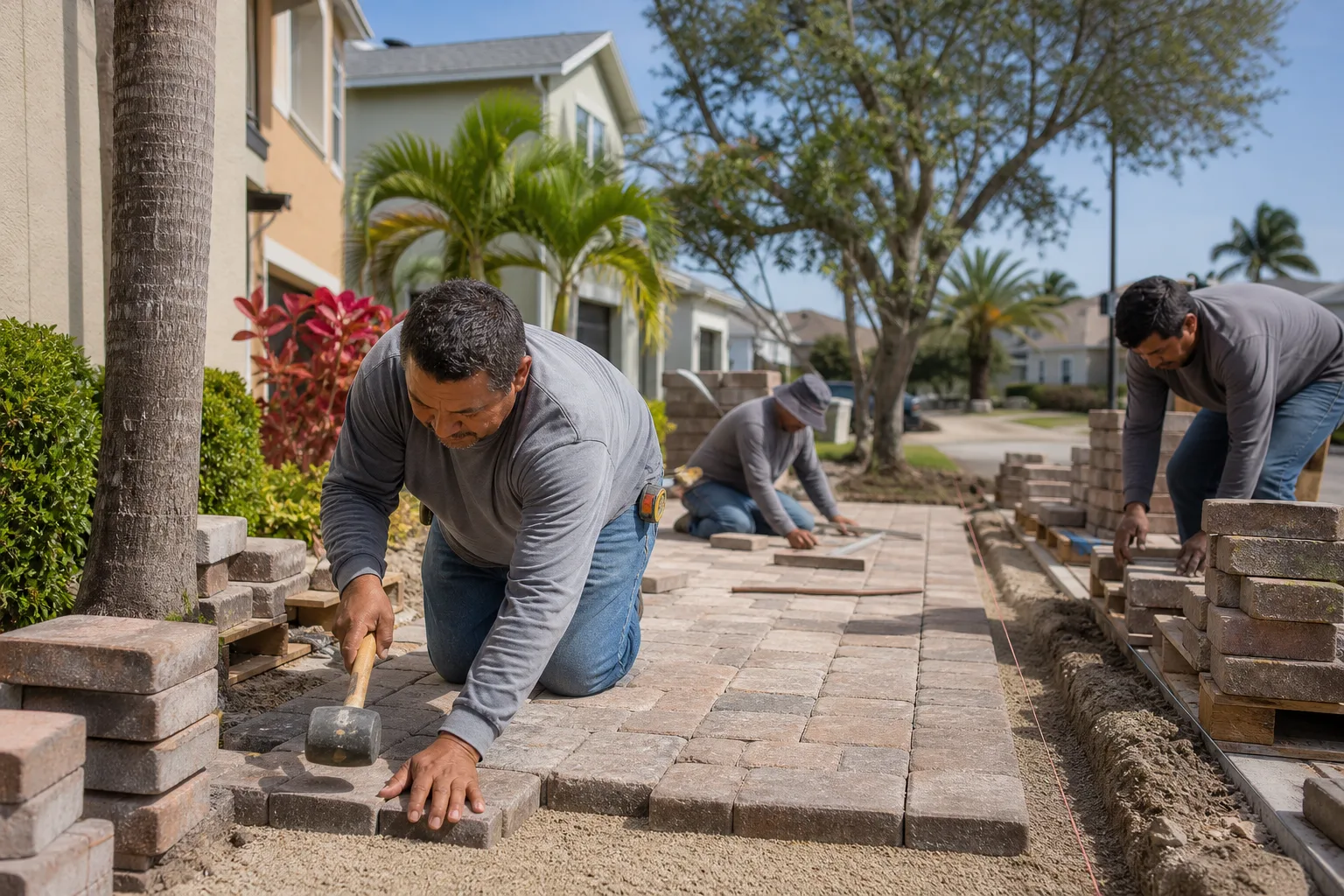
- Paver installation (2 – 3 days). Setting the edge restraint, laying the field pavers, cutting border pieces, and achieving the slope and pattern. A 400-square-foot driveway runs about two days of laying with a solid crew.
- Jointing and compaction (half day). Sweeping polymeric sand into the joints, vibrating the field, and topping up the joints.
- Curing and sealing (1 day plus cure time). Sealing adds a day of work and locks you out of the driveway for 24 – 48 hours afterward. Not every project needs immediate sealing, and we discuss that timing with you.
So the hands-on work is 3 – 5 days. The full elapsed calendar for a Kendale Lakes paver driveway, permit window included, is realistically 7 – 10 working days once crews are on site, or six to eight weeks from signed contract to drive-on. If you’re weighing this project against other outdoor work, our Driveway & Pavers in Kendale Lakes page covers materials and design choices that affect both cost and schedule.
Miami-Dade Permit Timelines and Why They Swing
Miami-Dade County moves driveway permits through the right-of-way and building review system, and the clock starts when you submit a complete, accurate package. In practice, review time swings from about two weeks to six weeks. That range isn’t randomness: it comes down to how clean the submittal is, how busy the review queue is, and how the contractor’s permitting history reads on paper.
Contractors with a track record of clean, well-documented submittals and inspection sign-offs tend to move through the queue at a steadier clip. Repair requests, incomplete site plans, or missing right-of-way details each add a review cycle. On a recent comparison of two similarly sized Kendale Lakes paver drives, the clean submittal cleared in 17 days; the one needing two corrections sat for 41.
What this means for your schedule:
- Ask for the permit number and submittal date in writing. A contractor who can’t produce them hasn’t pulled anything.
- Don’t let demo start before approval. Any work before the permit is issued risks stop-work orders and rework that adds weeks.
- Lock in a start date only after permit approval, not before. A contract that promises a start date before approval is a schedule trap for the homeowner.
- Ask who pulls the permit. It should be the contractor’s job, as the licensed professional, and it should be itemized in the pricing.
South Florida code details also matter here. Driveway approaches must meet the county’s minimum width, slope, and clear-zone standards near the right-of-way, and any driveway crossing county property needs the right-of-way permit on top of the private work. Getting those clear before submittal is one more thing that shortcut-prone contractors skip, and it costs you weeks.
Weather Holds: How the Rainy Season Rewrites Your Schedule
South Florida’s wet season runs roughly May through October, and in Kendale Lakes the pattern is almost religious: sunny morning, buildup by noon, hard rain by 2 or 3 p.m. That rhythm works fine for paver-setting, which happens above the base. It’s base work and final sealing that suffer.
Here’s why. Base prep requires the subgrade and the crushed base to be compacted at the right moisture content. Rain-soaked base has to dry out before it can be re-compacted to spec, and that drying takes days, not hours. If base prep is underway and the afternoon rain settles in for three straight days, you can lose a full work week before the crew touches a paver again. Sealing is even more sensitive: if the surface is damp or the humidity is too high when sealant goes down, it clouds and won’t cure properly, and a recoat means a whole additional day.
How we structure around the weather on Kendale Lakes jobs:
- Front-load demo and base work in the dry season. November through April gives you weeks of predictable weather, and that’s why paver installs scheduled late in the year tend to finish ahead of schedule.
- Schedule base prep and sealing for mornings during the wet season. A crew that starts early beats the afternoon rain to the punch on both phases.
- Build weather-day allowances into the calendar, not the price. A well-written contract will specify that rain days extend the schedule but don’t trigger a change order.
- Keep the site draining. A tarp over exposed base overnight costs nothing and saves a dry-out day.
We treat rainy-season schedule risk as expected, not surprising. A driveway project started in July in Kendale Lakes should carry a built-in buffer of three to five working days. If a contractor says otherwise, ask what they’ll do when the rain sits in for a week.
The Hidden Timeline Killers Under Your Driveway
The single most common reason a driveway project blows its schedule has nothing to do with the driveway. It’s what’s buried under it. Excavation is where the calendar goes sideways, and it’s the phase every estimate on day one quietly assumes will be uneventful.
Here’s what we’ve seen turn a two-day demo into a seven-day hold:
- Buried irrigation lines and valve boxes. Older Kendale Lakes properties often have irrigation that was rerouted or added by a previous owner with no records. Cutting a live line mid-demo means shutting water off, capping it, and deciding whether to relocate or abandon it.
- Old concrete under newer asphalt. A lot of driveways have been surfaced over instead of removed. You don’t know until the asphalt is off, and then the demo doubles or triples. That’s a scope change, not a contractor’s error.
- Unstable soil and organic matter. South Florida’s high water table and sandy soils mean you occasionally hit a soft, mucky pocket where the subgrade won’t compact. That requires over-excavation and replacement with select fill, which adds a day or two of material hauling and compaction.
- Utility conflicts. Gas, water, electrical, and cable runs cross under driveways in places that don’t always match the drawings. When a conflict turns up, verification and coordination with the utility can pause work for a few days.
- Hidden root zones. Large ficus or oak roots under a driveway surface often have to be cut and the base rebuilt over time.
The protection is a scope clause, not wishful thinking. Before you sign, ask your contractor to spell out what happens if buried concrete or a utility conflict is discovered after excavation. A fair contract treats those as excused conditions with a stated procedure for re-pricing, and it prices the discovery inspection up front. If the quote assumes the perfect scenario and leaves the discovery unaddressed, you’re the one carrying the cost of the surprise.
Our crew has had to dig out more than a few of these surprises across South Florida. The point isn’t to scare you. It’s that the best defense is a contractor who priced the check before the first load went in.
How to Structure a Contract That Protects Your Timeline
A driveway contract does two jobs: it defines the work and it tells you who carries the risk of delay. Most homeowner problems come from the second job being done poorly. Here’s how to split “excused delays” from “contractor scheduling failures” in writing.
Excused delays are events outside anyone’s control. Rain and weather that prevents safe or spec-compliant work, a county review queue that takes longer than quoted, unexpected soil conditions or buried utilities that couldn’t reasonably have been found before excavation, and supplier backorders on a specified product. These should extend the schedule and should not trigger a change order or a price increase.
Contractor scheduling failures are on the contractor. A crew that shows up two weeks late because you got bumped for a bigger job, a permit that lapses because it wasn’t renewed, a re-inspection caused by the contractor’s own work, or materials that weren’t ordered on time. These should come with a stated remedy, from a schedule commitment to a discount, and they should never be written in as your loss.
What a timeline-protective contract includes:
- A start date that’s conditioned on permit approval, plus a clearly defined window after approval.
- A line-item payment schedule that ties draws to completed phases, not to dates on a calendar.
- A written change-order process that requires your signature before additional work proceeds and before any new cost is incurred.
- A weather clause that says rain days extend the schedule without affecting the price.
- A dispute step for calling the contractor back if a phase fails inspection or finishes off-spec, and the warranty language that covers it.
On our own jobs, the payment schedule is tied to inspection sign-offs and to a written final walkthrough before the last draw. That’s one part of how we can stand behind the whole project with the 730-Day Done Right Promise: if workmanship fails within that window, we make it right. When you’re comparing bids, read the payment and delay sections side by side, and bring questions to the free estimate rather than after the first invoice.
How Material Choice Changes the Clock
Not every surface adds or subtracts the same number of days. Pavers are generally the most schedule-predictable material for a Kendale Lakes driveway because they’re set above the base, tolerate short rain interruptions, and can be re-set without demolition. Concrete adds cure time – typically a week before you can drive on it – and is more sensitive to rain during the pour. Asphalt is fast to place but needs a hot-mix plant in-cycle and a clean, dry base.
Within pavers, the spec matters. Standard thickness and modular shapes install fast. Large-format slabs, complex inlays, and tight pattern work cost extra days. Fancy border patterns that look effortless in photos are the ones that quietly add two days to the laying phase.
Material brand choice usually doesn’t change the timeline as long as it’s in stock. Where the clock can move is the pre-order. A product that needs a special order can add a week of lead time before you can even start, and if the delivery slips, so does the whole job. If you’re planning a full exterior project alongside the driveway, coordinating the material orders up front between your paver supplier and your fence and landscaping plans is worth doing. Our Fence Installation in Kendale Lakes page explains how those exterior timelines stack.
Our technicians work with a curated set of brand partners, and we’ll tell you up front which options fit the schedule in front of you. It’s one reason we’re careful not to promise a start date on a product we haven’t confirmed is in a warehouse. “Built to last, backed in writing” only means something if the schedule you were given is real.
Living Through a Driveway Project
The calendar is only half the story. The other half is what your household does while the driveway is a construction site. A few practical notes make these 7 – 10 days much easier:
- Park on the street or a neighbor’s driveway for the full window, not just demo day. The seal and cure phases will lock you out again even after the pavers are in.
- Plan deliveries and school drop-offs around the crew’s hours. Most crews start early to beat the rain, and a 7 a.m. start means the driveway is already closed to cars by the time you leave.
- Expect noise and dust during demo. A two-car drive demo is loud for a morning. If you work from home, plan for a day off-site.
- Keep pets and kids clear of exposed base. The sub-base and excavation edges are the highest-risk part of the site, and a toddler can find a hole faster than you can say “back edge.”
If your project is part of a larger exterior build – a detached garage, an accessory unit, a full yard rebuild – sequencing matters. Our Home Additions & ADU in Kendale Lakes page covers how we stagger outdoor phases so you’re not tearing up a finished driveway to pour footings. If you’re coordinating multiple trades, one contractor handling the lot can save more time than any single material choice.
Common Mistakes to Avoid
- Letting the crew start demo before the permit is issued. A stop-work order from the county can freeze the project for weeks and force re-demo. The permit is your schedule insurance, not paperwork.
- Signing a contract with no weather clause. In Kendale Lakes, rain delays are a season, not an event. A contract that doesn’t address them shifts the schedule risk onto you.
- Assuming the quote covers buried concrete or utility relocation. Ask directly what happens if hidden conditions turn up. The good contractors have a written procedure; the sketchy ones shrug.
- Picking a start date before confirmed material delivery. A truck can’t come early if the pavers haven’t arrived. Confirm the supplier lead time, in writing, before you commit.
- Skipping the free estimate to “save time.” The estimate visit is where you see whether the contractor walked your site and measured it or just eyed it from the curb. It’s also where you ask about permit history.
- Ignoring your own drive-on restrictions. Some pavers and sealing products need 24 – 48 hours of cure time. Planning your household around “the pavers are in” instead of “the seal is cured” costs a second day of street parking.
- Comparing bids by bottom-line only. A bid that’s a few hundred dollars cheaper but leaves the permit and disposal out of scope turns into the more expensive one by week three.
See the difference
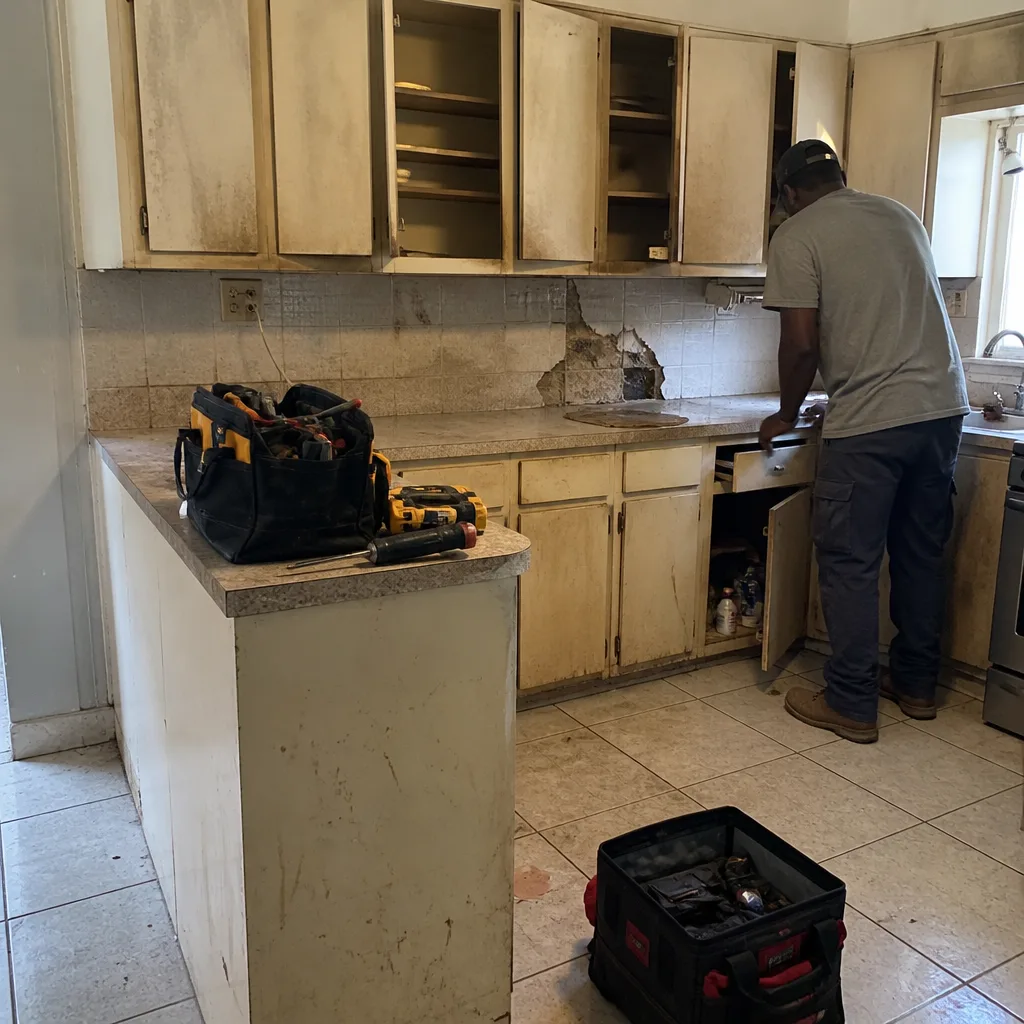 Before
 After
 Before
 After
 Before
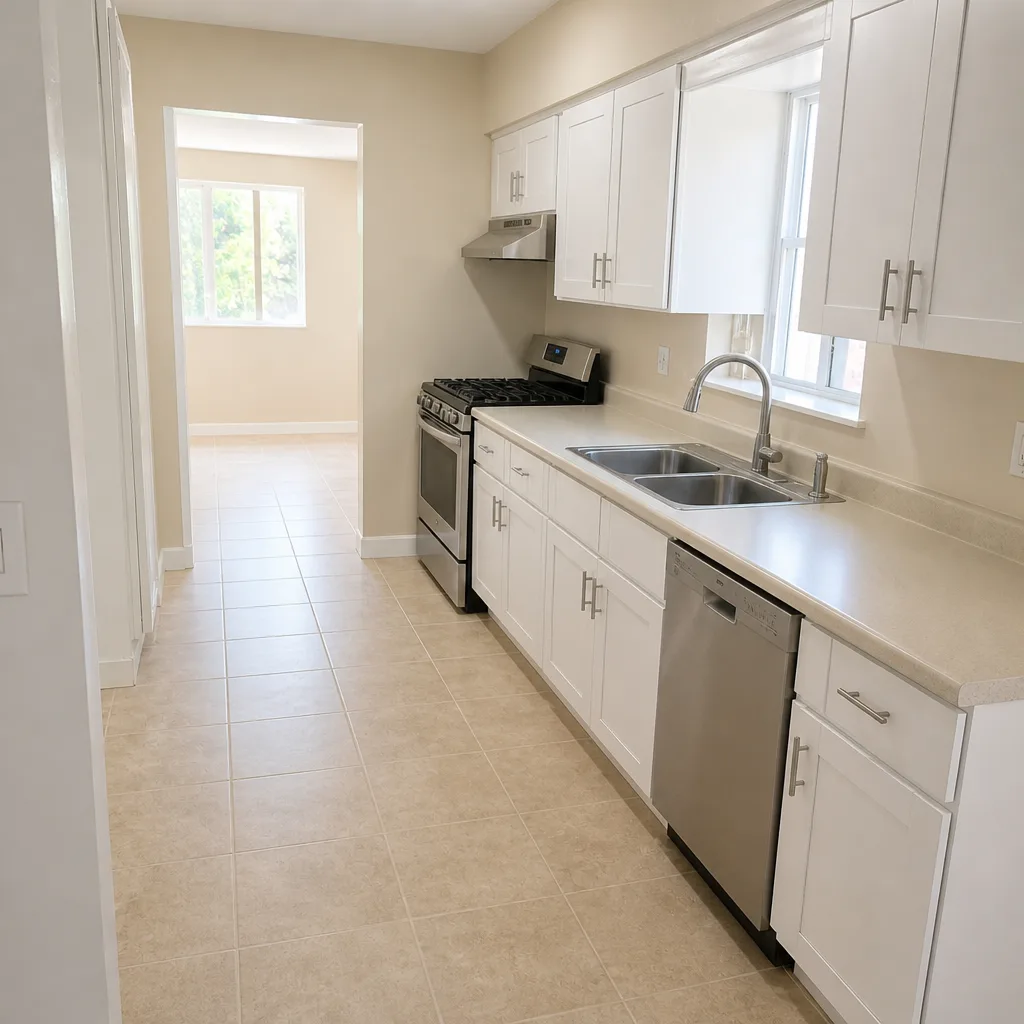 After
When to Call a Professional
If your driveway is cracking, settling unevenly, pooling water along the garage apron, or showing repeated joint failure, planning a replacement or major repair is the right call. If your project involves new right-of-way approaches, grading, or any confirmed utility conflict, it’s not a job for a weekend crew with a plate compactor. Deep base work, permit submittals, and coordinating utility locates are where professionals earn the schedule. Groundwork Construction Co. of Kendale Lakes offers free estimates in Kendale Lakes and covers the full scope from permit to final walkthrough. Call (844) 834-8961 to schedule yours. Our technicians have up to 12 years of experience, and we’ll tell you honestly what the timeline looks like for your specific property.
Frequently Asked Questions
Plan for 7 – 10 working days from permit approval to final seal, though the on-site work itself is 3 – 5 days. Add 2 – 6 weeks for Miami-Dade County permit review before any excavation begins. The rest of that window is weather and dry-out time during the wet season, plus whatever the site reveals once base work starts.
Yes, for replacement or new right-of-way approaches and for any significant grading change. The permit package includes a site plan, the proposed slope and drainage, and the right-of-way details. Missing or incomplete documents are the biggest cause of a multi-week review delay. Call (844) 834-8961 for an exact scope review of your property.
Rain matters most during base prep and sealing. Soaked subgrade has to dry out before it can be compacted to spec, and drying can take two to four days after heavy summer rain. Sealant applied to a damp surface clouds and fails to cure. Building in a three-to-five-day buffer during the May – October wet season is normal practice in Kendale Lakes.
Not honestly. A start date before permit approval is a promise the contractor can’t keep because the county controls the review clock. The right way is a contract that sets a defined start window after approval, plus a written procedure for weather and hidden-condition delays. Ask for the permit application date in writing.
A standard two-car paver driveway in Kendale Lakes typically runs $8,000 – $18,000 for materials and installation, depending on square footage, base condition, and paver choice. Sealing, utility relocation, and removing buried concrete are the common add-ons. Call (844) 834-8961 for an exact quote; estimates are free, and the number you see is the number you pay.
Work pauses while the condition is documented, then you get a written change order before any additional cost is incurred. A fair contract defines how that discovery is handled up front. In Kendale Lakes, buried concrete under asphalt and old irrigation lines are the two most common surprises, and both are fixable without blowing up the schedule if the procedure is agreed in advance.
The Bottom Line
Most driveway and paver projects in Kendale Lakes take 7 – 10 working days on site, and the biggest threats to that number are the permit window, dry-out days during the rainy season, and what turns up under the old surface. Get the permit terms, weather clause, hidden-condition procedure, and payment schedule in writing before you sign. Then confirm your paver order and your household parking plan before demo day. That’s the difference between the 7 – 10 days you were quoted and the 4-week story you didn’t plan for. Call (844) 834-8961 for a free estimate and a straight answer on your specific property.
If you’re ready to look at the full scope side of this work – from this driveway project to fencing, additions, and roofing under one roof – start at our Groundwork Construction Co. of Kendale Lakes home page. We’ll put the timeline in writing, walk you through the contract line by line at the free estimate, and line up the brand partners and background-checked installers to make it happen.
Written by the team at Groundwork Construction Co. of Kendale Lakes.